Davao City is exploring a collective land ownership system for socialized housing to provide informal settler families with long-term housing security and protect them from displacement, land speculation and forced property sales.
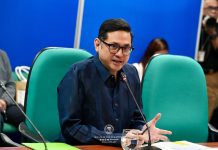
Councilor Temujin “Tek” Ocampo, chairperson of the City Council Committee on Environment and Natural Resources, introduced the proposed Davao City Urban Poor Collective Land Tenure Ordinance during his privilege speech at the 21st City Council’s regular session on Tuesday.
The proposed ordinance seeks to replace the conventional practice of awarding individual land titles to urban poor beneficiaries with a system of collective ownership, ensuring that land acquired for socialized housing remains under community control.
Ocampo said individual land titles do not always guarantee lasting housing security, particularly when families facing financial difficulties are compelled to sell their properties.
He warned that such transactions could force beneficiaries back into informal settlements, including communities located along riverbanks, hazard-prone slopes and other unsafe areas.
“When an urban poor family receives a separate title, poverty often forces them to sell that land, driving them right back into dangerous riverbanks, hazard-prone slopes, and new informal settlements,” Ocampo said.
Under the proposed measure, the city would establish a Collective Land Acquisition Program (CLAP), supported by Master Titles and Community Land Trusts (CLTs), to keep acquired properties under permanent collective community ownership.
Qualified beneficiaries would receive long-term Certificates of Occupancy and Usufruct Rights (COUR) instead of individual land titles. These would provide them with legal rights to occupy and use their homes while preventing the land from being sold for private speculation.
“Through the Collective Land Acquisition Program (CLAP) and the establishment of Master Titles and Community Land Trusts (CLTs), we are instituting a paradigm shift. We are ensuring that land acquired for socialized housing remains under collective community ownership in perpetuity,” he said.
Ocampo said the proposed arrangement would protect families from losing their homes and preserve the land for the benefit of future generations.
The ordinance also proposes the creation of a Davao City Collective Socialized Housing Trust Fund to support land acquisition, site development and direct equity subsidies for qualified beneficiaries.
The fund would receive an initial seed allocation, development funds and revenues from idle land taxes. It would also extend financial assistance to vulnerable sectors, particularly senior citizens, persons with disabilities and single parents.
Ocampo said the measure seeks to address not only the housing needs of urban poor families but also their long-term security and dignity.
“Housing is not a mere commodity; it is a fundamental human right and the bedrock of human dignity. By enacting this ordinance, we give our urban poor communities not just a roof over their heads, but enduring stability, legal security, and a permanent stake in Davao City’s shared prosperity,” he said.
Ocampo moved for his privilege speech to be considered read on first reading and referred to the Committee on Housing, Rural, and Urban Development for appropriate action.
The proposed ordinance was approved on first reading and referred to the committee for deliberation. It will still undergo the legislative process before it can be approved and implemented.