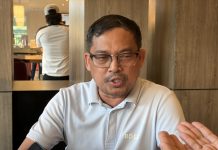
Davao City is poised to play a bigger role in the country’s next phase of economic growth, with Finance Secretary and Investment Czar Frederick D. Go highlighting the city’s strong economic performance and its strategic position as the economic center of Mindanao.
Speaking as keynote speaker at the Philippine Economic Briefing (PEB) in Davao City on Monday, Go said the city has become an important link connecting businesses, workers, capital, and markets across the region.
“Davao City is an important part of the Philippine growth story. It is the economic center of Mindanao. The region has been connecting business, employees, capital, and markets,” Go said.
He pointed to Davao City’s continued economic expansion, noting that it is among the country’s fastest-growing highly urbanized cities.
Davao City posted a 7.9% growth rate in 2024, placing fifth among highly urbanized cities nationwide in annual economic growth, behind Puerto Princesa, Iligan, Butuan, and Tacloban.
The city also ranked fifth among HUCs in economic size, contributing 2.6% to the country’s gross domestic product. Its economy was valued at P574.72 billion.
“And Davao City is moving faster even faster forward,” Go said.
The Finance chief also cited the performance of the broader Davao Region, which grew by 5.1% in 2025, outpacing the national growth rate of 4.4%.
The region’s Gross Regional Domestic Product reached P1.14 trillion at constant 2018 prices, extending its run as a trillion-peso economy for a third consecutive year.
Go said Davao Region remains the largest economy in Mindanao, the fifth-largest regional economy in the country, and the fourth-fastest-growing regional economy nationwide.
The PEB gathered government economic managers, business leaders, investors, and other stakeholders to discuss the country’s economic outlook, ongoing reforms, and investment opportunities in key sectors such as infrastructure, agriculture, energy, manufacturing, tourism, logistics, and digital services.
The briefing also highlighted efforts by the Marcos administration to strengthen Mindanao’s integration into the country’s broader economic and investment agenda.
Go said the government’s goal is to ensure that economic expansion creates more jobs, attracts investments, and generates wider opportunities for Filipinos.
“The Department of Finance is committed to fiscal discipline and prudent spending,” he said.
He said the government is also pursuing measures to reduce inefficiencies and channel public resources toward programs with high economic and social impact.
Among the reforms he cited were lower Securities and Exchange Commission registration fees, longer Bureau of Customs importer accreditation validity, and reduced Creditable Withholding Tax rates imposed by the Bureau of Internal Revenue on local importers and manufacturers.
Go encouraged business leaders and industry stakeholders to invest in Mindanao and help develop industries capable of competing in the global market.
“The next chapter of Philippine growth will be shaped in Mindanao. So let us make future industries happen here and in the Philippines,” he said.
He stressed that unlocking Mindanao’s full economic potential will require sustained cooperation among government agencies, the private sector, and development partners.
“The opportunities before Mindanao are immense and require our concerted efforts. Achieving our development goals calls for a whole-of-government approach and strong collaboration with the private sector and development partners,” Go said.
He added that closer collaboration can help create an environment where investments can grow while ensuring that the gains from development reach more communities throughout Mindanao.