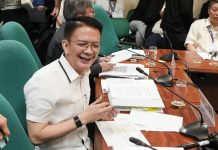
Ernesto Raphael V. Robillo, regional director of Land Transportation Office Region 11 (LTO-11), said fixing activities tied to agency transactions are not widespread, but emphasized the need for sustained enforcement and public awareness to prevent abuse.
“I cannot say it’s really rampant,” Robillo said, noting that the agency continues to conduct regular operations targeting illegal practices, including anti-colorum and monitoring of partner institutions such as dealers and service providers.
Efforts to curb fixers are carried out in coordination with other law enforcement bodies, including the National Bureau of Investigation (NBI) and the Criminal Investigation and Detection Group (CIDG), in line with the Ease of Doing Business and Efficient Government Service Delivery Act of 2018.
Robillo noted that joint operations have been conducted multiple times, with recent enforcement actions highlighting the agency’s ongoing campaign against illegal intermediaries.
On April 20, 2026, four suspected fixers were arrested in an entrapment operation led by the NBI outside the LTO office along Quimpo Boulevard. The operation was initiated at the request of LTO-11 as part of efforts to dismantle fixer networks and investigate possible internal links.
The suspects are facing charges for alleged violations of Republic Act 11032, which penalizes fixers and promotes efficient government service delivery.
While acknowledging the presence of individuals who act as intermediaries for legitimate services such as driving schools and insurance, Robillo stressed that exploitation and overcharging will not be tolerated.
He clarified that marketing services or earning commissions is not inherently illegal, but warned against deceptive practices that take advantage of unsuspecting clients.
Robillo cited cases where individuals offer to process documents for clients, only to charge excessive fees or misrepresent official procedures.
To address the issue, he underscored the importance of improving frontline services and encouraging the public to transact directly with LTO offices.
He added that the agency has streamlined its processes and continues to work closely with accredited partners—including driving schools, medical clinics, and emission testing centers—to ensure transparency and compliance.
Robillo reiterated that while legitimate facilitators may operate within proper guidelines, the public should remain cautious and avoid dealing with individuals promising faster transactions at a higher cost.