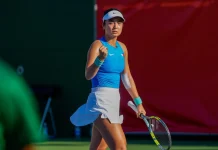
Philippine pole-vault star EJ Obiena has called on the public to extend understanding and support to tennis ace Alex Eala amid criticism over her recent defeats, reminding fans that setbacks should not define an athlete’s career.
In a social media post, Obiena highlighted the intense pressure athletes face to deliver results, noting that a single competition can overshadow months or even years of preparation, discipline and hard work.
Eala drew criticism following a series of setbacks in September, including an early exit at the Wuhan Open, a round-of-16 loss at the Singapore Tennis Open, and a bronze-medal finish at the 2026 Asian Games. She fell in the women’s singles semifinals despite entering the competition as the top seed.
Obiena, a two-time Olympian, illustrated the pressure athletes face by comparing their performances to those in other professions.
“In the 100m, around ten seconds can judge a year of work,” he said.
He also cited Serbian tennis star Novak Djokovic, a 24-time Grand Slam champion, as an example of how even the most accomplished athletes experience defeats throughout their careers.
“Perfection can be an objective; yet is never achieved,” Obiena said.
He stressed that athletes, like everyone else, have good and bad days, adding that a disappointing performance should not erase the effort and dedication invested in reaching the competition.
“We are human. And like all humans we have good days and bad days,” he wrote.
Applying his message to Eala’s situation, Obiena questioned the tendency to view consecutive losses as a measure of an athlete’s overall ability. He also acknowledged that national athletes, including himself, face similar challenges and setbacks in their respective careers.
Obiena further criticized the practice of attacking athletes on social media when they are already struggling, saying harsh comments are unlikely to help them recover or improve their performances.
“Kicking someone when they are having a bad day is poor recipe for getting the desired result you seek,” he wrote.
He urged the public to reflect on how they would want to be treated during difficult moments and to extend the same compassion to athletes facing disappointment.
“Ask yourself: ‘How do I want to be supported when I have a bad day?’ Then act accordingly. Some days we win. Some days we lose,” Obiena said.