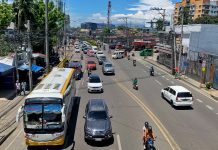
The Kidapawan City government has adopted a P1,849,533,440 annual budget for 2026, with P1.56 billion, or the bulk of its funding, coming from the city’s National Tax Allocation (NTA).
The NTA will bankroll most of the city’s infrastructure projects, basic services, and development programs across its 40 barangays, while locally generated revenues from taxes, fees, and other income sources will supplement government spending.
Based on the 2024 Census of Population, Kidapawan has 160,864 residents and a land area of 358.47 square kilometers. As a component city of Cotabato Province, it also retains locally generated revenues to complement its NTA in financing public services and development initiatives.
Cotabato Province, which comprises 480 barangays, has a population of 1.58 million and a land area of 9,008.90 square kilometers, and is set to receive P5.01 billion in NTA for 2026.
Among Kidapawan’s 40 barangays, Poblacion will receive the largest allocation at P37.71 million, reflecting its population of 28,191. It is followed by Sudapin (P17.14 million), Lanao (P14.56 million), Singao (P14.40 million), Amas (P11.78 million), and Balindog (P11.12 million).
Other barangays receiving relatively higher allocations include Magsaysay (P9.39 million), Nuangan (P8.96 million), Manongol (P8.73 million), Kalasuyan (P8.66 million), Paco (P8.47 million), and Ilomavis (P7.84 million).
The remaining barangays will receive allocations ranging from P3.52 million to P6.90 million, including Kalaisan, Binoligan, Perez, Linangkob, Patadon, Mateo, Mua-an, New Bohol, Balabag, Ginatilan, Birada, Macebolig, Sumbac, Junction, Meohao, San Isidro, Katipunan, Sibawan, Gayola, Santo Niño, Onica, Marbel, Sikitan, Luvimin, Amazion, Indangan, San Roque, and Malinan.
Formerly known as the Internal Revenue Allotment (IRA), the NTA is distributed among local government units based on population (50%), land area (25%), and equal sharing (25%). It remains a key funding source for local governments to finance healthcare, education, public infrastructure, social welfare, disaster preparedness, and other essential services.