The Mindanao Development Authority (MinDA) and the World Bank have reaffirmed their commitment to fast-track poverty reduction and unlock Mindanao’s economic potential through strengthened collaboration on growth corridor development.
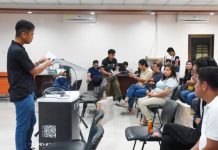
The renewed partnership was highlighted during the Philippines Economic Update (PEU) Development Dialogue held at Pryce Tower in Davao City, where government officials, development partners, and business leaders gathered to discuss strategies for sustaining economic momentum in the region.
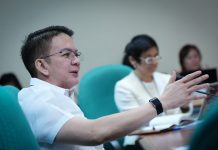
MinDA Chairperson Secretary Leo Tereso A. Magno underscored the strategic importance of investing in Mindanao, noting that focused public spending in infrastructure, essential services, and community empowerment directly contributes to lifting families out of poverty.
“Strategic investments in Mindanao’s growth corridors create ripple effects across industries and communities. Every infrastructure project and every service improvement opens new pathways for jobs, enterprise development, and long-term stability,” Magno emphasized.
He added that Mindanao continues to serve as a key pillar of national development under the leadership of Ferdinand Marcos Jr., with sustained collaboration from global development institutions playing a crucial role in driving inclusive expansion.
During the dialogue, World Bank economists presented findings from the latest PEU report, noting that the Philippine economy grew by an average of 5 percent during the first three quarters of 2025 despite weather-related disruptions and slower construction activity. Easing inflation and recent policy rate adjustments, they said, provide space to stimulate investments even as fiscal pressures remain.
The PEU — the World Bank’s flagship semi-annual economic assessment — featured “Growth Corridors: Pathways Out of Poverty” as its central theme, outlining how integrated infrastructure, logistics systems, urban planning, and governance reforms can transform regional economies into engines of sustainable development.
World Bank Senior Country Economist Jaffar Al-Rikabi highlighted that while global economic conditions show resilience, domestic reforms remain essential.
“Corridor-based strategies can generate quality employment and strong multiplier effects,” Al-Rikabi noted. “But these gains must rest on sound institutions, fiscal discipline, and consistent governance reforms to ensure long-term poverty reduction.”
Participants from local government units, national agencies, academe, and private sector groups echoed the need for tighter inter-agency coordination and faster implementation of priority projects to boost investor confidence and job creation across Mindanao.
World Bank representatives also emphasized that connecting production hubs to domestic and international markets through improved transport and logistics networks can expand opportunities beyond the island, reinforcing broader Philippine economic recovery.
In line with the administration’s fiscal consolidation agenda, MinDA reaffirmed its focus on strengthening oversight, improving project execution, and ensuring that capital investments generate measurable socioeconomic returns without undermining macroeconomic stability.