
Senator Paolo Benigno “Bam” Aquino IV is rallying for a stronger, unified national shield to protect Filipinos’ hard-earned savings and personal identities amid an unprecedented surge of digital heists and data leaks sweeping across Asia and the globe in the recent weeks.
He pushed for Senate Bill No. 2248, or the proposed National Cybersecurity and Critical Information Infrastructure Protection Act.

Aquino, who chairs the Senate Committee on Science and Technology, emphasized that modern cyber threats have evolved far beyond mere technical glitches. Today, stolen data directly translates into empty bank accounts and ruined livelihoods.
“Sa panahon ngayon, hindi lang personal na impormasyon ang nanganganib dahil sa hacking at data leaks. Pati ang pinaghirapang ipon at kabuhayan ng ating mga kababayan ay maaaring malagay sa panganib kapag nagamit ang kanilang datos sa online scams,” Aquino warned.
The senator’s urgent legislative proposal arrived as financial institutions across the Asia-Pacific region and the broader digital economy endure a relentless wave of sophisticated attacks over the past several weeks.

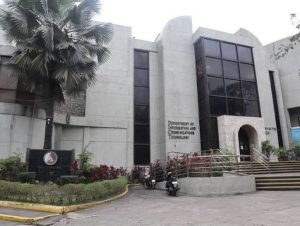
Just days ahead of the ASEAN Leaders’ Summit in Manila, cybersecurity watchdogs and the National Privacy Commission (NPC) confirmed data breach reports affecting at least 10 government agencies, including the Bureau of Internal Revenue (BIR), the Department of Information and Communications Technology (DICT) and the Department of Labor and Employment (DOLE).
The incident exposed millions of records that scammers actively exploit for phishing and financial fraud.
Last October 29, St. Luke’s Medical Center (SLMC) experienced a digital data security incident involving a third-party platform supporting its eHealth Hub mobile application.
The breach potentially exposed personal information belonging to some patients and employees.
Also, this November, threat intelligence from FortiGuard Labs revealed that Indonesia’s banking, finance and insurance sectors were hammered by more than 1.2 million cyberattacks within a single 24-hour period.
South Korean financial institutions, including Shinhan Bank, KB Kookmin Bank and Yegaram Savings Bank, suffered consecutive waves of AI-automated cyberattacks throughout October, compromising the credit card details, income records, and personal data of nearly 200,000 customers.
On the global stage, analysts at the Center for Strategic and International Studies (CSIS) called the largest cryptocurrency heist in history, draining USD 6.3 billion digital wallets from Binance in a 20-minute automated sweep.
To ensure Filipinos do not have to live in constant fear of digital theft, Senate Bill No. 2248 establishes a dedicated National Cybersecurity Agency (NCSA).
The measure will shift the country from reactive damage control to proactive defense against cyberattacks.
The law also requires the NCSA to provide direct data-security training to micro, small, and medium enterprises (MSMEs) and online merchants so they can safeguard customer records.
He said that technological progress must never come at the expense of citizen security.
“Habang patuloy na umuunlad ang teknolohiya, kailangan ding palakasin ang proteksyon sa personal na impormasyon at perang pinaghirapan ng bawat Pilipino,” he concluded.