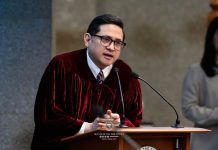
To provide students with a safe and conducive space for learning beyond regular hours, Councilor Danilo Dayanghirang has proposed opening the Davao City Library on a 24/7 basis.
Dayanghirang, who chairs the City Council’s Committee on Finance, Ways and Means, and Appropriations, made the proposal during his privilege speech on Tuesday, highlighting the need to adapt to the realities of modern learning.
“I propose the opening of the Davao City Library on a 24-hour basis — a safe, supervised, and productive space where our students can study, research, and collaborate without fear of violating curfew,” Dayanghirang said.
Rather than seeing young people loitering in the streets or crowding into unsafe and poorly lit places, Dayanghirang believes that creating a round-the-clock learning hub will give them a better outlet for their time and energy.
“Education, as we all know, is the great equalizer. It empowers our people, shapes our leaders, and builds the future of our community. Yet despite the many initiatives we have already launched for education, I believe there remains one more area where we can innovate — by improving the accessibility of study spaces in Davao City, especially beyond regular hours,” he said.
Dayanghirang cited the city’s existing curfew ordinance, which was implemented to protect youth from exposure to harm or criminal activity during late hours. He expressed full support for the intent of the law but pointed out a gap in addressing students’ academic needs at night.
“Many of our students, especially those from working-class families, do not have access to a quiet, well-lit, and internet-connected study environment at home. Not all households can afford gadgets or stable internet. This is where we can intervene meaningfully,” he added.
According to Dayanghirang, operating the city library 24/7 would provide multiple benefits:
• It would strengthen academic performance by giving students equal access to learning resources.
• It would reduce youth exposure to unsafe environments and discourage engagement in vices.
• It would align Davao City with global best practices, where libraries and study hubs serve as essential, round-the-clock learning partners.
“We complement our thrust for digital transformation by ensuring that public study spaces are equipped with internet access, computers, and safe, supervised facilities,” he emphasized.
Dayanghirang’s proposal is expected to spark discussion within the City Council and among stakeholders in education and youth welfare. If implemented, Davao City could become one of the first local government units in the country to offer a public library open 24/7 — a move seen as both progressive and inclusive.