The Department of Science and Technology 11 (DOST 11) is calling for stronger water conservation efforts as the ongoing Super El Niño is expected to persist until the middle of 2027, raising concerns over water supply and agricultural production.
DOST 11 Regional Director Dr. Anthony C. Sales said communities, farmers and businesses need to prepare for prolonged dry conditions and adopt more responsible water-use practices.
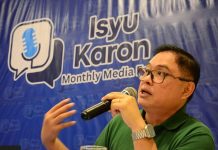
“And ngayon nga, itong Super El Niño is upon us, it already started, and the information that we got from PAGASA is this will extend up to the middle of 2027,” Sales said during the Kapehan sa Dabaw at SM City Annex on Monday.
Sales said DOST has been providing advisories, information and technologies to help stakeholders prepare for the impacts of the climate phenomenon as part of its disaster risk reduction and climate adaptation mandate.
“DOST is already heavily into the issuances of advisories to our various stakeholders. In pursuit of our mandate as Vice Chair for Disaster Risk Disaster Prevention and Mitigation, our main function really is to provide information, to provide technologies para magamit sa atong mga stakeholders,” he said.
He said El Niño could affect not only temperatures but also rainfall patterns, potentially reducing water availability and affecting food production.
“I’m sure you know the principle behind or underlying the El Niño phenomenon: the increase in temperature in the Pacific Ocean, subsequently, you also affect rainfall. So, with El Niño, lower rainfall. So, kung lower rainfall, lower supply of water, and that affects food production,” Sales said.
DOST-PAGASA, he said, continues to coordinate with the agriculture and farming sectors to help them identify appropriate measures to mitigate the effects of prolonged dry conditions.
“We are constantly now in dialogue with the farming sector, agriculture sector para kabalo sila kung unsa ’y pwedeng mitigating measures sa El Niño,” he said.
Sales emphasized the need for integrated water resources management, warning that unnecessary consumption could put additional pressure on groundwater and water production systems.
“And part of that is really water management, integrated water resources management, kay kung pasagdan lang ta’g gamit, makita ninyo nga diha sa mga kalsada nato na sige’g gamit ug drinking water supply for washing of vehicles. Imagine that,” he said.
He urged households, businesses and other water users to do their part in conserving supplies.
“So, let’s act together and do what we can to contribute more efforts in water integrated water resources management para lesser ang burden on our aquifers, lesser ang burden on the production of water, and we can save them for more important uses,” Sales said.
Sales also highlighted the role of the DOST-Philippine Council for Agriculture, Aquatic and Resources Research and Development (PCAARRD) in developing technologies that can help farmers and communities cope with environmental risks.
“Ang PCAARRD, for many years, for many decades already, have been providing funds for the development of different technologies on agriculture, aquaculture, and resources research and development,” he said.
He said science-based information and climate-resilient technologies will remain important as communities prepare for the continuing effects of El Niño.
Sales likewise encouraged residents and businesses to use HazardHunterPH, a DOST platform that provides location-specific information on hazards such as flooding, earthquakes and landslides.
“HazardHunterPH is a platform where you can determine the different hazards that are that may be present in the areas where you operate,” he said.
The tool, he added, can help people make informed decisions on where to build homes or establish businesses by identifying potential hazards in specific locations.
“Mao nang kini HazardHunterPH, it locates and it identifies the different hazards uh including flooding, earthquake, even landslides,” Sales said.