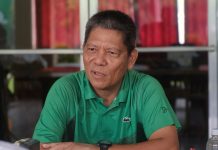
Vice President Sara Duterte and Davao City Mayor Sebastian “Baste” Duterte are calling for deeper economic cooperation between Mindanao and Borneo, urging government and business leaders to translate the region’s geographic proximity, shared heritage and existing connections into concrete trade, investment and employment opportunities.
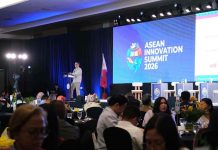
The siblings made the call during the Davao-Borneo Growth Corridor Forum 2026 at the SMX Convention Center at SM Lanang Premier in Davao City on Friday, where stakeholders from Mindanao, Sabah, Sarawak, Kalimantan and Brunei Darussalam gathered to discuss ways to strengthen cross-border economic ties.
In her speech, “Forging a Unified Future: Transforming Borders into Opportunities in Mindanao and Borneo,” Duterte said regional cooperation should focus not only on physical connectivity but also on creating opportunities that allow communities and businesses to benefit from cross-border economic activity.
She shared the stories of two women to illustrate the challenges created when borders limit economic and personal opportunities.
One was a Sabah trader whose family had long transported goods between Malaysia, Tawi-Tawi and Zamboanga but eventually left for the Gulf after kidnappings prompted governments to restrict the trade.
The other was a young Tausug from Sulu who learned Bahasa through Malaysian television and aspired to become a video editor but left Mindanao after struggling to find opportunities locally.
“Two women, two journeys, two reminders of what happens when talent meets a border it cannot safely cross. An economy that has no room for it yet. We are here to decide what kind of region we want to build,” Duterte said.
She noted that the Brunei Darussalam-Indonesia-Malaysia-Philippines East ASEAN Growth Area (BIMP-EAGA), established 32 years ago, now covers 82.68 million people and has a combined economic output of $1.34 trillion.
“That is no longer a peripheral opportunity. That is an economic force,” she said.
Duterte outlined four shifts she said should guide regional cooperation: from proximity to partnership, complementarity to investment, connectivity to economic value, and partnership to action.
“Let us make cross-border cooperation not an occasional project, but an everyday reality,” she said.
She said Mindanao’s strengths in agriculture, tourism and its growing consumer market complement Borneo’s capital, industry and logistics capabilities.
“These are not competing pieces. These are pieces of the same puzzle,” Duterte said.
The vice president also emphasized that infrastructure projects should generate economic activity and improve access to markets.
“We talk about infrastructure as though the road, the port, the airport is the destination. It is not. A port only matters when a farmer can reach a market. A shipping route matters when a trader can cross the sea safely. Infrastructure without use is just concrete,” she said.
Duterte cited the 265 priority BIMP-EAGA infrastructure projects valued at $174.6 billion and called for improvements in border systems, maritime safety and customs procedures, as well as the revival of legitimate maritime trade.
“Government cannot build this opportunity alone. Business leaders, investors, this is yours to drive,” she said, adding that regional growth should create more opportunities for people to remain and build their livelihoods in their home communities.
Meanwhile, Mayor Baste highlighted Davao City’s role in BIMP-EAGA, noting that the regional cooperation initiative was formed in the city 32 years ago.
“Davao City is 1,218 kilometers from Borneo, separated by the Sulu and Sulawesi Seas; but just like the greater BIMP-EAGA region, we share in our Austronesian heritage, our diverse flora and fauna, and our maritime trade history,” he said.
The mayor said the city’s participation in the corridor reflects the need for stronger partnerships and linkages amid the increasingly interconnected global economy.
“As government and industry leaders, it is our shared responsibility to pursue initiatives that open investment opportunities for our respective communities. Strengthening cross-border trade not only boosts our local economies; it also accelerates socioeconomic development in the region,” he said.
He encouraged participants to develop business-to-business and business-to-government partnerships and explore investment opportunities in Davao City.
“Through the partnerships we forge today, let us shape a shared future marked by prosperity, stability, and peace, a future that extends far beyond the Davao-Borneo Corridor and the EAGA, and into the rest of the world,” he said.
Carrying the theme “Forging Partnerships, Shaping Shared Futures,” the forum focused on investment, trade, tourism, infrastructure, technology and human capital development.
It sought to identify opportunities for stronger business and institutional partnerships between Mindanao and Borneo through business-to-business (B2B) and business-to-government (B2G) engagements.
The initiative is anchored on the broader BIMP-EAGA framework and Vision 2035, while the Davao-Borneo Corridor Action Statement 2030 is expected to guide continued cooperation in investment, technology, market development and other areas.