A senator called on economic managers to align the national budget with strategic 10-year education plans, bridge the severe classroom shortage, and protect vulnerable communities from economic strain during the Senate Committee on Finance hearing on August 27, 2026.
Senator Paolo Benigno “Bam” Aquino IV emphasized that while education remains a top priority in national spending, short-term budget planning continues to hinder systemic transformation. He urged economic managers to align yearly budget proposals directly with the Second Congressional Commission on Education (EDCOM II) 10-year education roadmap.
“Ang goal po natin… kung pwede ninyong ilapat ‘yung budgeting natin with regard to the needs for education for the next 10 years. Kasi ‘yung spending natin at the current level or previous to 2026 is simply not enough to really make a dent in our education space,” he said.
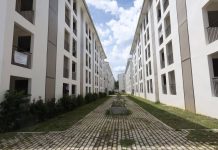
The senator highlighted the necessity of sustained, multi-year commitments to avoid backsliding to address the national classroom gap, which stands at an estimated 160,000 classrooms.
“Kung hindi natin ime-maintain ‘yung ganung klaseng spending, we might backslide, and the reforms that are being done… ay baka mawala po ulit. We really need to fund this… the funding can’t be one year or two years. It has to be 10 years… and every time na umuulan, every time na nagkaka lindol, every time na nagkakabaha, a thousand classrooms at a time nasisira, so we really need to fund this,” Aquino explained.
Moving beyond education, he advocated for direct tax relief and cost-of-living adjustments designed to cushion low and middle-income families from inflation. He presented proposals to expand personal income tax exemptions to align with the estimated family living wage.
“Living wage in 2026 is close to P40,000 for a family of five. Tinapat ko po ‘yung P40,000 dun sa P480,000 kasi P40,000 x 12 is P480,000,” he added.
To lower daily utility costs, Aquino proposed waiving the 12% Value-Added Tax (VAT) specifically for residential electricity consumers, offering immediate savings without burdening commercial sectors unnecessarily.
“Kung tatanggalin po ‘yung VAT sa kuryente ng mga residential… this could mean a bigger drop in the electricity bill of our citizens,” he said.
Focusing on industrial expansion and anti-corruption, Aquino raised concerns over major infrastructure developments, such as the 1,600-hectare PAX SILICA project, ensuring local communities and indigenous peoples are not displaced without proper assistance.
“We want to see the advanced manufacturing. We want to see the industrialization. Pero ayaw ho natin na yung pinaka mahihirap, yung magsasaka, yung mga IP na nanduduon po ay masagasaan. Again, we’re talking about 1,600 hectares. Siguro naman ho we can look for space and look for support for them to make sure that these families hindi sila mapeperwisyo. So, we can look for that budget in the BCDA funds, not necessarily in the GAA,” Aquino stressed.
He also reiterated his call to enact proactive disclosure frameworks such as the CADENA Law tosafeguard public funds against corruption during severe weather and disaster reconstruction.
“Sa FOI kaylangan mag tanung yung citizen para makuha ho yung data. Sa CADENA Law, lahat ng data naka labas na ahead of time at naka mandato ang mga ahensya na ilabas ito as part of their work. At kung hindi nila ilalabas to, pwede silang makasuhan. I’m hoping that if we pass this law, sana po maitulak natin tong pag babago ng sistema and we can really make a dent against corruption,” he concluded.
Aquino believes that true empowerment begins when the government actively protects its most vulnerable citizens, investing in its youth and ensures that every peso of public funding delivers measurable, lasting progress for the Filipino people.