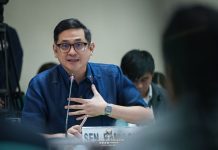
The Samal Island-Davao City (SIDC) Connector Bridge is expected to be completed by 2028, according to Davao del Norte Governor and Regional Development Council 11 (RDC 11) Chair Edwin Jubahib.
Jubahib said the RDC 11 continues to monitor the implementation of the major infrastructure project and is coordinating with the Department of Public Works and Highways (DPWH) and the Mindanao Development Authority (MinDA) to ensure that funding remains available.
“We are focusing on the bridge connecting Babak, Samal to Davao City. So, that’s one of the mega projects we are focusing on, ensuring funding won’t be cut through continuous follow-ups with DPWH and MinDA,” Jubahib said in an interview.
He said Department of Economy, Planning, and Development (DepDev) Secretary Arsenio Balisacan, formerly secretary of the National Economic and Development Authority (NEDA), has confirmed the 2028 target for the bridge.
“Mismo si Secretary Arsenio Balisacan, gi-confirm niya nga mahuman jud ang maong tulay within 2028,” Jubahib said.
The project is expected to significantly improve connectivity between Davao City and the Island Garden City of Samal (IGaCoS) once completed.
Jubahib also acknowledged reports that DPWH 11 may be seeking additional funding for the project, saying the national government could be required to provide additional equity.
“Naa daw naay murag gitawag nga equity. Equity on the part of the Philippine government, pero according to the DepDev, naa man sila’y target nga budget para ana,” he said.
Meanwhile, preparations are already underway in Samal to accommodate the expected increase in population, tourists and investments that could follow the bridge’s completion.
Jubahib said he recently spent three days on the island with Samal Mayor Toto Reyes, during which they discussed preparations for the anticipated growth. Among the concerns identified was the need to upgrade the island’s road network.
He said the island’s circumferential roads, which are mostly two lanes at present, need to be widened to four lanes, with provisions for sidewalks and drainage.
“Kinahanglan ma-widen ang ang roads nato, ang circumferential roads nga sa karon is two lanes, dapat mahimo na siyang four lanes. Then i-consider pa ang sideways and then the drainage,” Jubahib said.
Jubahib said he also discussed the proposed road expansion with Davao del Norte First District Rep. Jay M. Lagdameo, who he said would prioritize a request for the project.
“Nag-istorya pod mi ni Congressman Jay M. Lagdameo nga mahatagan niya og priority ang pag-request sa project for the road expansion of the island,” he said.
The governor said Samal’s power supply, previously considered a major vulnerability, has likewise improved with the delivery of 50 megawatts through a submarine cable by Davao Light and Power Company.
“So far, ang the most vulnerable situation sa una is ang kuryente man, pero karon kay naa na may 50 megawatts nga gi-deliver ang Davao Light and Power Company through submarine cable,” he said.
With infrastructure improving and the bridge nearing its target completion, Jubahib said interest in Samal is already increasing, with prospective residents and investors scouting the island for opportunities.
“So nakita nako nga murag dili problema ang pagkahuman sa tulay kay karon palang daan kumbaga naga-scout na ang mga mga tao nato nga interested nga mupuyo o mu-establish sa island. Labi na katong mga investor nga gusto mu-invest,” he said.
However, Jubahib stressed that development must be accompanied by measures to protect the island’s environment, particularly as the population is expected to grow.
He said authorities are studying the establishment of a sewage and wastewater treatment facility to manage waste and prevent water pollution.
“In preparation lang sa pag-increase sa population sa Samal is atong gipag-estudyohan karon nga magkaroon ta ug sewage facility, nga mao ni ang mu-cater sa mga human waste, nga i-treat. Mahimong mag-put up ta ug treatment facility ana, para nga malikayan nato ang nahitabo sa mga ubang island nga nagkaroon og problema regarding sa water pollution,” Jubahib said.
Jubahib said these measures are intended to ensure that Samal’s expected economic growth and increased connectivity will be matched by adequate infrastructure and environmental safeguards.