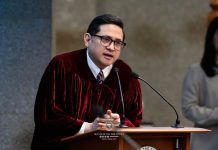
Davao City Councilor Diosdado Mahipus Jr. is calling on government housing agencies to dedicate a portion of public housing projects to the poorest and homeless families at no cost, emphasizing that housing should be treated as a matter of human dignity rather than a revenue-generating program.
Mahipus, who chairs the City Council’s Committee on Housing, Rural and Urban Development (Socialized Housing Projects) and serves on its Oversight Committee, said existing housing initiatives have helped many families secure permanent shelter. However, he noted that the most impoverished sectors continue to struggle because they cannot afford even subsidized monthly payments.
“Gamiton nato ang kwarta sa gobyerno aron adunay libre ug disenteng puy-anan ang walay kapuy-an, allocate units for free for the poorest of the poor, homeless,” Mahipus said.
He said housing programs implemented by the local government, the National Housing Authority (NHA), the Social Housing Finance Corporation (SHFC), and other agencies have created opportunities for low-income families to own homes. Yet for those without any capacity to pay, these opportunities remain out of reach.
“What happens to those who cannot afford even the affordable option?” Mahipus asked.
According to the councilor, the housing issue should be viewed beyond economics and financing.
“Housing is not merely an economic concern. Housing is not merely a social concern. Housing is a matter of human dignity,” he said.
Mahipus stressed that while many beneficiaries can manage reduced amortization rates, there are families living in extreme poverty who remain excluded from government housing programs because of their inability to make regular payments.
He said authorities should consider alternative approaches to ensure that these families are not left behind.
“If there remain poor families who cannot benefit from the program, then government must also be willing to explore other mechanisms to ensure that no one is left behind,” he said.
The councilor argued that public housing programs should not be treated as income-generating ventures and reminded government agencies of their social responsibility to assist the most vulnerable.
“Ang gobyerno dili negosyo. Ang katuyoan sa gobyerno dili pagpangita ug kita gikan sa mga kabus. Ang katuyoan sa gobyerno mao ang pagserbisyo sa katawhan, ilabi na sa mga labing nanginahanglan sa tabang sa Estado,” he said.
Among the options he proposed is the use of gratuitous usufruct arrangements, which would allow qualified beneficiaries to occupy housing units without paying amortization or rental costs.
For Mahipus, providing shelter does not always have to begin with homeownership.
“Sometimes, it must first be viewed as a pathway to safety, stability, and dignity,” he said.
He also pointed to recent disasters and displacement incidents as evidence of the continuing housing crisis faced by many Dabawenyos. Fire incidents, demolitions, flooding, landslides, and other emergencies have left thousands of families without secure homes, highlighting the urgent need for stronger government intervention.
“These tragedies remind us that many of our people still do not have safe, decent, and permanent homes,” he said.
Mahipus challenged the Department of Human Settlements and Urban Development (DHSUD), NHA, SHFC, and other housing stakeholders to rethink how the success of housing programs is evaluated.
“Dili nato sukdon ang kalampusan sa housing program pinaagi lamang sa gidaghanon sa natukod nga units. Dili nato sukdon kini pinaagi lamang sa collection efficiency o sa gidaghanon sa nakabayad. Sukdon nato kini pinaagi sa gidaghanon sa mga walay kapuy-an nga nahatagan ug kapuy-anan,” he said.
He maintained that the true measure of success lies not in the number of housing units constructed or the amount collected from beneficiaries, but in the number of homeless families given safe and decent shelter.
In closing, Mahipus reiterated his appeal for government resources to be directed toward those who need assistance the most.
“Spend public funds to provide safe and decent housing for those who have no homes of their own especially the poorest among our people who have no capacity to pay for the housing programs being offered today. Let government housing programs become instruments not merely of financing, but of social justice, human dignity, and genuine poverty alleviation,” he said.